Atlas Library Mac
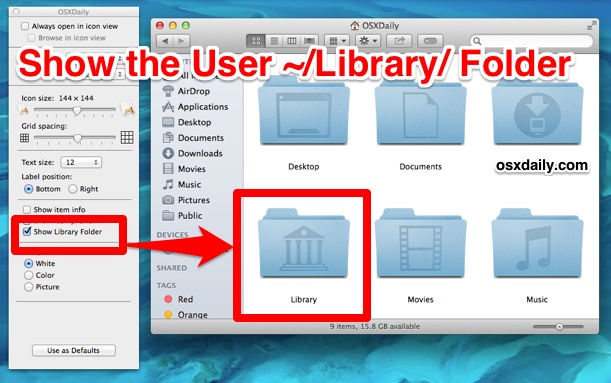
Alternatively, the user can download ATLAS to automatically generate an optimized BLAS library for his architecture. Some prebuilt optimized BLAS libraries are also available from the ATLAS site. If all else fails, the user can download a Fortran77 reference implementation of the BLAS from netlib. However, keep in mind that this is a reference. Form for people who use ATLAS on windows to share experiences and install tips. Aug 30, 2016 Download Complete Anatomy Platform 2020 for macOS 10.12 or later and enjoy it on your Mac. Most advanced and best-selling 3D anatomy platform with groundbreaking new technology, models and content. Not just an atlas, but an anatomy learning platform with unique collaboration and learning tools. A vast library of curated learning. Mar 29, 2019 How to Find the Library Folder on a Mac. This wikiHow teaches you how to force your Mac's user 'Library' folder to show up in the Finder window. While the 'Library' folder is hidden by default, you can prompt it to appear both temporarily. The ATLAS (Automatically Tuned Linear Algebra Software) project is an ongoing research effort focusing on applying empirical techniques in order to provide portable performance. At present, it provides C and Fortran77 interfaces to a portably efficient BLAS implementation, as well as a few routines from LAPACK.
Tomer Kanan, Assistant Clinical Professor 'Our students have total control over how they consume the information. With Visible Body students manipulate the 3D models in a way that makes sense to them.'
| Repository | |
|---|---|
| Type | Software library |
| License | BSD License |
| Website | math-atlas.sourceforge.net |
Automatically Tuned Linear Algebra Software (ATLAS) is a software library for linear algebra. It provides a mature open source implementation of BLASAPIs for C and Fortran77.
ATLAS is often recommended as a way to automatically generate an optimized BLAS library. While its performance often trails that of specialized libraries written for one specific hardware platform, it is often the first or even only optimized BLAS implementation available on new systems and is a large improvement over the generic BLAS available at Netlib. For this reason, ATLAS is sometimes used as a performance baseline for comparison with other products.
ATLAS runs on most Unix-like operating systems and on Microsoft Windows (using Cygwin). It is released under a BSD-style license without advertising clause, and many well-known mathematics applications including MATLAB, Mathematica, Scilab, SageMath, and some builds of GNU Octave may use it.
Atlas Library Macon Ga
Functionality[edit]
ATLAS provides a full implementation of the BLAS APIs as well as some additional functions from LAPACK, a higher-level library built on top of BLAS. In BLAS, functionality is divided into three groups called levels 1, 2 and 3.
- Level 1 contains vector operations of the form
- as well as scalar dot products and vector norms, among other things.
- Level 2 contains matrix-vector operations of the form
- as well as solving for with being triangular, among other things.
- Level 3 contains matrix-matrix operations such as the widely used General Matrix Multiply (GEMM) operation
- as well as solving for triangular matrices , among other things.
Optimization approach[edit]
The optimization approach is called Automated Empirical Optimization of Software (AEOS), which identifies four fundamental approaches to computer assisted optimization of which ATLAS employs three:[1]
- Parameterization—searching over the parameter space of a function, used for blocking factor, cache edge, etc.
- Multiple implementation—searching through various approaches to implementing the same function, e.g., for SSE support before intrinsics made them available in C code
- Code generation—programs that write programs incorporating what knowledge they can about what will produce the best performance for the system
- Optimization of the level 1 BLAS uses parameterization and multiple implementation

- Every ATLAS level 1 BLAS function has its own kernel. Since it would be difficult to maintain thousands of cases in ATLAS there is little architecture specific optimization for Level 1 BLAS. Instead multiple implementation is relied upon to allow for compiler optimization to produce high performance implementation for the system.
- Optimization of the level 2 BLAS uses parameterization and multiple implementation
- With data and operations to perform the function is usually limited by bandwidth to memory, and thus there is not much opportunity for optimization
- All routines in the ATLAS level 2 BLAS are built from two Level 2 BLAS kernels:
- GEMV—matrix by vector multiply update:
- GER—general rank 1 update from an outer product:
- Optimization of the level 3 BLAS uses code generation and the other two techniques
- Since we have ops with only data, there are many opportunities for optimization
Level 3 BLAS[edit]
Most of the Level 3 BLAS is derived from GEMM, so that is the primary focus of the optimization.
- operations vs. data
The intuition that the operations will dominate over the data accesses only works for roughly square matrices.The real measure should be some kind of surface area to volume.The difference becomes important for very non-square matrices.
Can it afford to copy?[edit]
Copying the inputs allows the data to be arranged in a way that provides optimal access for the kernel functions, but this comes at the cost of allocating temporary space, and an extra read and write of the inputs.
So the first question GEMM faces is, can it afford to copy the inputs?
If so,
- Put into block major format with good alignment
- Take advantage of user contributed kernels and cleanup
- Handle the transpose cases with the copy: make everything into TN (transpose - no-transpose)
- Deal with α in the copy
If not,
- Use the nocopy version
- Make no assumptions on the stride of matrix A and B in memory
- Handle all transpose cases explicitly
- No guarantee about alignment of data
- Support α specific code
- Run the risk of TLB issues, bad strides, etc.
The actual decision is made through a simple heuristic which checks for 'skinny cases'.
Cache edge[edit]
For 2nd Level Cache blocking a single cache edge parameter is used.The high level choose an order to traverse the blocks: ijk, jik, ikj, jki, kij, kji. These need not be the same order as the product is done within a block.
Typically chosen orders are ijk or jik.For jik the ideal situation would be to copy A and the NB wide panel of B. For ijk swap the role of A and B.
Choosing the bigger of M or N for the outer loop reduces the footprint of the copy.But for large K ATLAS does not even allocate such a large amount of memory.Instead it defines a parameter, Kp, to give best use of the L2 cache. Panels are limited to Kp in length.It first tries to allocate (in the jik case) .If that fails it tries .(If that fails it uses the no-copy version of GEMM, but this case is unlikely for reasonable choices of cache edge.)Kp is a function of cache edge and NB.
Atlas Lapack Mac
LAPACK[edit]
When integrating the ATLAS BLAS with LAPACK an important consideration is the choice of blocking factor for LAPACK. If the ATLAS blocking factor is small enough the blocking factor of LAPACK could be set to match that of ATLAS.
To take advantage of recursive factorization, ATLAS provides replacement routines for some LAPACK routines. These simply overwrite the corresponding LAPACK routines from Netlib.
Need for installation[edit]
Installing ATLAS on a particular platform is a challenging process which is typically done by a system vendor or a local expert and made available to a wider audience.
Atlas Library Machine
For many systems, architectural default parameters are available; these are essentially saved searches plus the results of hand tuning. If the arch defaults work they will likely get 10-15% better performance than the install search. On such systems the installation process is greatly simplified.
References[edit]
- ^R. Clint Whaley; Antoine Petitet & Jack J. Dongarra (2001). 'Automated Empirical Optimization of Software and the ATLAS Project'(PDF). Parallel Computing. 27 (1–2): 3–35. CiteSeerX10.1.1.35.2297. doi:10.1016/S0167-8191(00)00087-9. Retrieved 2006-10-06.
External links[edit]
Atlas Library C++
- Automatically Tuned Linear Algebra Software on SourceForge.net
- The FAQ has links to the Quick reference guide to BLAS and Quick reference to ATLAS LAPACK API reference
- Microsoft Visual C++ Howto for ATLAS