Transfer Iphoto Library From Old Mac To New Mac
- Transfer Iphoto Library From Old Mac To New Mac Computer
- Transfer Iphoto Library From Old Mac To New Mac Target Disk Mode
Aug 16, 2019 How to Move iPhoto Library to a New Location/Computer iPhoto is a part of iLife software application suite, which not only helps you organize and edit your photos, but also lets you get more from these photos by making photo books, greeting cards and slideshows. IPhoto will generates a iPhoto Library folder or package that contains imported photos and any albums you've added using iPhoto.
Aug 14, 2011 I recently bought a new imac. I transferred my iphoto library from my old mac to an external hard drive. Then, I imported that library to iphoto '11. After, my library ballooned to over 19,000 photos with tons of duplicates and triplicates. Any idea what I did wrong? Any ideas how I. Select an iPhoto Library and click Choose Library. Allow the Library to sync. This can take a while, so if you've got things to do away from your Mac, set your machine to not go to sleep (System. Jan 21, 2012 I tried to transfer my iPhoto library from my old macbook to my new macbook air by using dropbox. Now I am getting a message that I need to up grade to iPhoto 11. I was told to put the old iPhoto library in dropbox and then move the photo library to the new iPhoto picture library. Apr 17, 2019 But, you have to locate the “Photo Library” folder instead of “iPhoto Library” folder. And then, tap on “Masters” to view your pictures set in folders by date. Part 2: How to Find Photos on Mac and Transfer Photos to Mac. No doubt, iPhoto or Photo application allows you to view pictures on Mac. I’m new to mac, and I’ve put a huge number of pictures into iPhoto. Now all of my old and new jpeg files exist in the iPhoto Library in Finder. If a few years down the road I get a Windows laptop, will I be able to transfer my iPhoto Library to my Windows “My Pictures” and still be able to access the files?
You can move your entire iPhoto Library to a new computer, an external hard drive or another location on your computer. If you want to move your iPhoto Library to a new computer, then first you need to move your iPhoto Library to an external hard drive and then from an external hard drive to a new computer. If you are looking for a step by step process to move iPhoto Library to new computer, read below.
Here are the steps to Move iPhoto Library to New Computer:

Transfer Iphoto Library From Old Mac To New Mac Computer
- Open 'iPhoto' on your Mac.
- Click 'File' located in the Menu Bar.
- Select 'Switch to Library..' option.
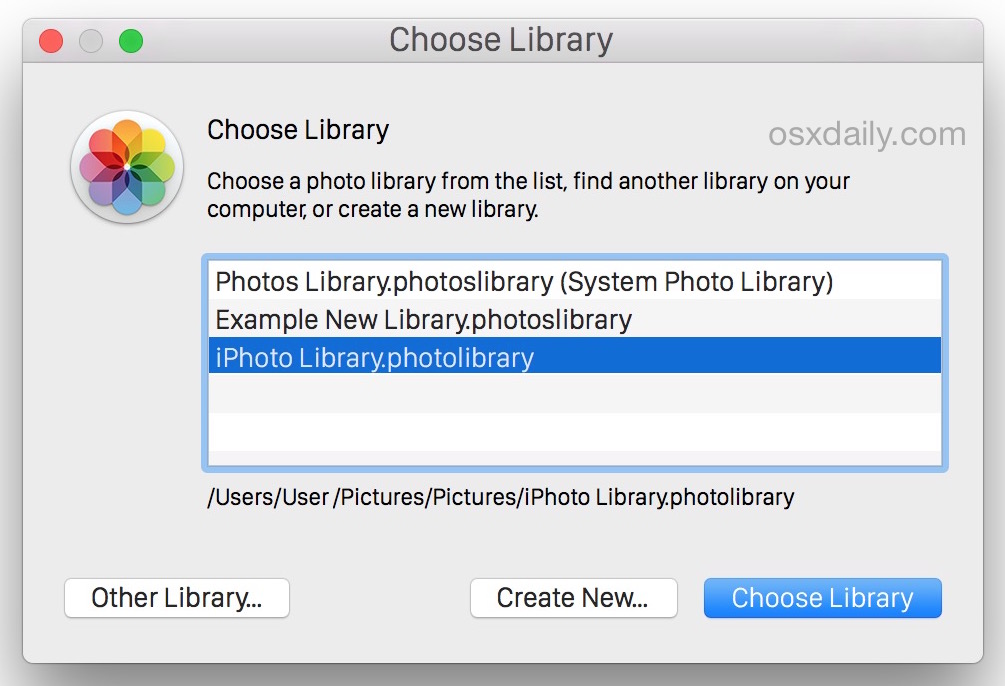
- A new window opens up. You will see all iPhoto libraries located on your computer.
- Quit 'iPhoto' by clicking on 'Quit iPhoto' located in the iPhoto Menu bar.
- Connect an external hard dive to move your iPhoto Library.
- Open a new Finder window and click 'Pictures' located in the left sidebar.
- Drag and drop iPhoto Library file onto the external hard drive.
- Once you moved iPhoto Library to an external hard drive.
- Open 'iPhoto' on your new computer.
- Hold down the 'Option' key on the keyboard, and keep the 'Option' key held down until you are prompted to create or choose an iPhoto library.
- Click 'Choose Library'.
- Locate and select the iPhoto Library you moved to an external hard drive.
- Hold down the Option key on the keyboard, and keep the 'Option' key held down until you are prompted to create or choose an iPhoto library.
- This is how you can move iPhoto Library to a new computer.
Your Photos library holds all your photos, albums, slideshows, and print projects. If your library is large, and you want to free up storage space on your Mac, turn on iCloud Photo Library and use Optimize Mac Storage, or move your library to an external drive.
Before you start, be sure to back up your library.
Transfer Iphoto Library From Old Mac To New Mac Target Disk Mode
Prepare your drive
You can store your library on an external storage device, such as a USB or Thunderbolt drive formatted as APFS or Mac OS Extended (Journaled).1 Find out how to check the format of your external storage device.
To prevent data loss, Apple doesn't recommend storing photo libraries on external storage devices like SD cards and USB flash drives, or drives that are shared on a network.
Move your Photos library to an external storage device
- Quit Photos.
- In the Finder, go to the external drive where you want to store your library.
- In another Finder window, find your library. The default location is Users > [username] > Pictures, and it's named Photos Library.
- Drag your library to its new location on the external drive. If you see an error, select your external drive's icon in the Finder, then choose File > Get Info. If the information under Sharing & Permissions isn't visible, click , then make sure the 'Ignore ownership on this volume' checkbox is selected. If it's not selected, click to unlock it, enter an administrator name and password, then select the checkbox.2
- After the move is finished, double-click Photos Library in its new location to open it.
- If you use iCloud Photo Library, designate this library as the System Photo Library.
Delete original library to save space
After you open your library from its new location and make sure that it works as expected, you can delete the library from its original location.
In a Finder window, go back to your Pictures folder (or whichever folder you copied your library from) and move Photos Library to the trash. Then choose Finder > Empty Trash to delete the library and reclaim disk space.
Open another Photos library
Show library folder mac finder yosemite 2017. If you have multiple libraries, here's how to open a different one:
- Quit Photos.
- Press and hold the Option key while you open Photos.
- Select the library that you want to open, then click Choose Library.
Photos uses this library until you open a different one.
Learn more
If you have a permissions issue with your library, you might be able to resolve the issue by using the Photos library repair tool.
1. You can't move your library to a disk that's used for Time Machine backups.
2. If the volume isn't formatted APFS or Mac OS Extended (Journaled), or has been used for Time Machine backups but hasn't been erased, this checkbox will either not be present, or won't be selectable after unlocking. Erase and reformat the drive for this option to be available.