Submit Photos To Mac Screensaver Photo Library
Dec 12, 2018 I just got the 10.14.2 update yesterday. After it applied I noticed that my screensaver was reset to 'Flurry'. I use 'Classic', which is the plain photos screensaver. No problem - I changed my screensaver back to Classic. But now I notice that the arrow keys no longer work in the screensaver to move forward and backward among the photos. A screen saver is an animated image that appears onscreen after a fixed period when your Mac doesn’t detect any keyboard, trackpad, or mouse activity. When selecting a screen saver, you can choose an image to display and the amount of time to wait before the screen saver starts. For an eco-friendlier alternative to using. Nov 29, 2016 Google brings gorgeous photo screensaver to Mac with multi-monitor support. I run the Google Photos app on both my Mac and iPhone to ensure all photos are automatically. You’re reading.
- Submit Photos To Mac Screensaver Photo Library Software
- Screensaver From Photo Gallery
- Submit Photos To Mac Screensaver Photo Library Free
- Submit Photos To Mac Screensaver Photo Library Download
This type of application focuses on photo processing and management. Photo enthusiasts can work with these applications, but they have features and capabilities that appeal to professionals, too.
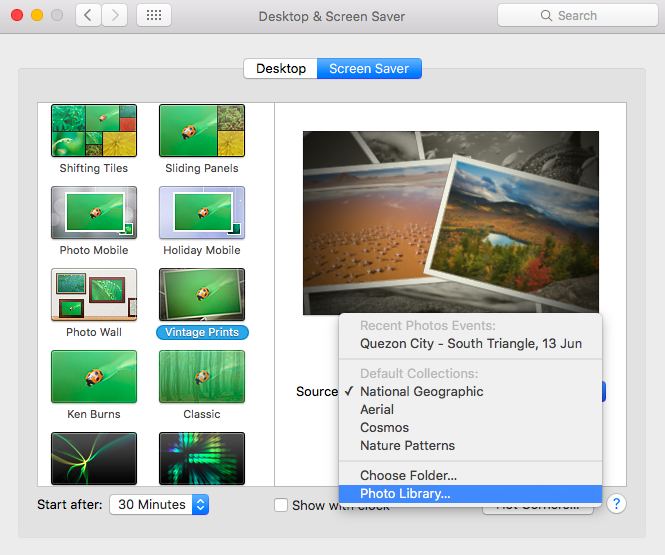
Sep 18, 2019 How to change the desktop and screen saver on your Mac. Click the source you'd like to use for your screensaver in the Source dropdown menu. Click when your screen saver should start. Click Photo Library in the Source dropdown menu. Jul 12, 2017 To move our Photos Library, we drag it to its new location, double-click it, and the Photos app will now point to it. So, that was pretty easy. We’ll next show you how to create a completely new System Photo Library. Creating a New System Photo Library. There are any number of reasons you might want to create a new system library in Photos. Once you add your photos and videos to Plex, they are organized in one place that is easy to navigate and beautiful to look at from any device. Create photo albums, share libraries, edit metadata, browse all of your photos and videos using automatic image- and geo-tagging, or rediscover forgotten memories.
Camera manufacturer software
Most camera manufacturers include free software that enables you to organize and process the photos you take with that camera. Canon calls its software Digital Photo Professional. Nikon’s free software is Capture NX-D. Sony’s is Image Data Converter. Pentax ships Digital Camera Utility with its cameras.
These applications all have their strengths and weaknesses. Their main draw is that the same people who encode data into the camera’s Raw file are the people who created the software that allows you to decode it. The camera manufacturer knows more about its files and proprietary settings than anyone else. If you are dedicated to a single brand and don’t plan on changing, you should consider this approach.
Adobe Photoshop Lightroom
The most popular photo management and processing application is Adobe Photoshop Lightroom. It’s moderately priced and available by monthly subscription. It’s my tool of choice.
This Macintosh/Windows application is made for photographers. It has just about everything you need in order to import, manage, develop, and publish Raw and JPEG photos. The following figure shows the Library tab. (Look at all those cool photo-management tools.) From this tab, you organize, sort, tag, rate, select, and more.
In Lightroom, you can create a single massive, all-inclusive catalog or create different catalogs based on different cameras, projects, or years. When you import photos into an open catalog, they show up as thumbnails in the Library tab, where you manage them. You can view, sort, filter, rate, delete, search for, compare, create, and assign keywords, quickly develop photos, and edit metadata. You can also export photos in a number of different formats.
To work with layers, masks, adjustment layers, artistic filters and effects, vector shapes, 3D support, text, frames, and other aspects unique to photo editors, you need to get a photo editor other than Lightroom.
Other applications
There are a host of other products available. This list is by no means all-inclusive:
- Capture One: Created by Phase One, Capture One isn’t well known outside of professional circles, but it should be. Its bevy of management features are comparable to Lightroom. Import photos and then sort, rate, preview, organize, tag (add keywords to), develop, and publish them. Organize your photos in catalogs or work one-on-one with photos by using sessions. Capture One also has albums, which are virtual collections. It’s fantastic, powerful, and professional, and it focuses on workflow and photo quality. Capture One Pro also has a very useful tethered shooting feature, which lets you control your camera from within the application and import the photos (and even apply processing to them) as you take them. It even supports Live View mode.
- Google Photos: Google’s new photo organizer (with minimal editing tools) is called Google Photos. It replaces Picasa, which has been retired. All your photos are stored online and organized in albums. You have unlimited storage in the cloud for free.
- Photos: Apple has recently come out with its Photos app to replace iPhoto. It features photo editing and managing tools, and integrates seamlessly with the iCloud Photo Library. Import and organize photos, view, rate, tag, title, edit, and publish them. Photos is excellent for Macophile hobbyists.
Photos helps you keep your growing library organized and accessible. Powerful and intuitive editing tools help you perfect your images. Memories displays the best images from your photo library in beautiful collections. And with iCloud Photos, you can keep a lifetime’s worth of photos and videos stored in iCloud and up to date on all of your devices.
Before you begin
- Update your Mac to the latest version of macOS.
- If you use iPhoto or Aperture to manage your photos and videos, upgrade to the Photos app.
Access all of your photos from anywhere
iCloud Photos automatically keeps all your photos in iCloud, so you can access them on your iPhone, iPad, iPod touch, Apple TV, Mac, iCloud.com, or on a PC. When you edit and organize images in the Photos app, your changes are kept up to date and visible everywhere.
Manage your iCloud storage
The photos and videos that you keep in iCloud Photos use your iCloud storage. Before you turn on iCloud Photos, make sure that you have enough space to store your entire collection. You can see how much space you need and then upgrade your storage plan if necessary.
Turn on iCloud Photos
It's easy to get started. Just turn on iCloud Photos in your Settings and make sure that you're signed in with the same Apple ID on all of your devices. On your Mac, go to System Preferences > iCloud and click the Options button next to Photos. Then select iCloud Photos.
Keep your photo library organized
On your Mac, your photo collection is separated into four main categories: Years, Months, Days, and All Photos. The All Photos tab shows all your photos and videos in chronological order. In Years, Months, and Days, you'll find your photos and videos grouped together based on the time and place they were taken.
The Photos app sorts your photos into Memories, Favorites, People, and Places in the sidebar under Library. The sidebar also shows what you and your friends have shared, your photo albums, and projects that you've created.
Learn more about organizing and finding your photos.
Do more with the Photos app
Your Mac is the place that you go to get things done. That’s why the Photos app makes it easier than ever to create a stunning slideshow, share with anyone you like, and quickly find the moment you’re looking for. All with a few clicks.
Play a slideshow or movie
You can prepare a slideshow directly in Photos with a few clicks. Open any album and click Slideshow. Customize the theme and music, then click Play Slideshow.
To play a movie, go to the Months or Days view, click the more button on any collection, then click Play Movie.
You can also view movies in the Memories section. Open a memory, then click the play button . As the movie plays, click the gear button to adjust the movie's mood and length.
Share with friends
Click the share button to share photos in Shared Albums, Mail, and more. Or send photos to your social media accounts, such as Facebook and Twitter.
Search your photos
Find the photo or video you're looking for in no time. Just use the search bar that's built directly into the Photos toolbar. You can search for photos using names of family and friends, locations, or what appears in the photos, like cake or balloons.
Delete photos and videos from your library
If there are photos and videos that you don't want anymore, you can delete one at a time, or several.
Delete one photo
- Select the photo that you want to delete.
- Press the Delete key.
- Confirm that you want to delete the photo.
Submit Photos To Mac Screensaver Photo Library Software
Delete multiple photos
- Press and hold the Command key.
- Select the photos that you want to delete.
- Press the Delete key.
- Confirm that you want to delete the photos.
When you delete a photo, it goes into your Recently Deleted album, where it stays for 30 days. If you use iCloud Photos, the photos that you delete are moved into the Recently Deleted album on your other devices too. After 30 days, Photos deletes the photos permanently. You can permanently delete photos right away when you click Delete All in the Recently Deleted album.
When you delete photos directly from an album by pressing the Delete key, you only remove them from the album and not your entire photo collection. If you want to delete photos from both the album and your collection, press Command-Delete.
Edit your photos
Photos includes powerful, easy-to-use editing tools. You can apply adjustments to your photos and make them look exactly the way you like. Then if you want to start over, you can always revert to the original photo. Here's how to get started:
- From the Photos view, or from within an album, double-click the photo you want to edit.
- Click Edit in the upper-right corner of Photos.
- The editing tools appear along the right side of the window. Click the tool you'd like to use.
After you edit your photo, click Done. Want to start over? Click Revert to Original. If you use iCloud Photos, you'll see the changes on all of your devices.
With Photos for macOS High Sierra and later, you can also send a photo to most third-party photo apps for editing, then save the changes right back into your library. Learn more about editing your photos with third-party apps and extensions.
Screensaver From Photo Gallery
See and add information about a photo
Submit Photos To Mac Screensaver Photo Library Free
How to search library mac. You can also add details to your photos, like a description, keywords, or a specific location. You can even Add Faces to name your friends and family in each photo.
Submit Photos To Mac Screensaver Photo Library Download
To view the Info window, double-click a photo to open it and then click the information button in the upper-right corner, or select a photo and use the keyboard shortcut Command-I. Once you add information, you can use the Search bar to find photos by keyword, title, description, faces, or location.