Sdl Libraries Mac

Install SDL 2. This is a multimedia library that lets MAME display graphics, sounds and read keyboards and game controllers. Download the SDL 2 Runtime Library for Mac OS X (Direct Link). Open the DMG and you should see the SDL file. On your Mac, open the /Library/Frameworks folder: Go to the Finder. In the menubar click Go Go to folder. Jan 12, 2020 You can access the hidden Library folder without using Terminal, which has the side effect of revealing every hidden file on your Mac. This method will only make the Library folder visible, and only for as long as you keep the Finder window for the Library folder open.
What is it?
Simple DirectMedia Layer is a cross-platform development library designed to provide low level access to audio, keyboard, mouse, joystick, and graphics hardware via OpenGL and Direct3D. It is used by video playback software, emulators, and popular games including Valve's award winning catalog and many Humble Bundle games.
SDL officially supports Windows, Mac OS X, Linux, iOS, and Android. Support for other platforms may be found in the source code.
SDL is written in C, works natively with C++, and there are bindings available for several other languages, including C# and Python.
SDL 2.0 is distributed under the zlib license. This license allows you to use SDL freely in any software.
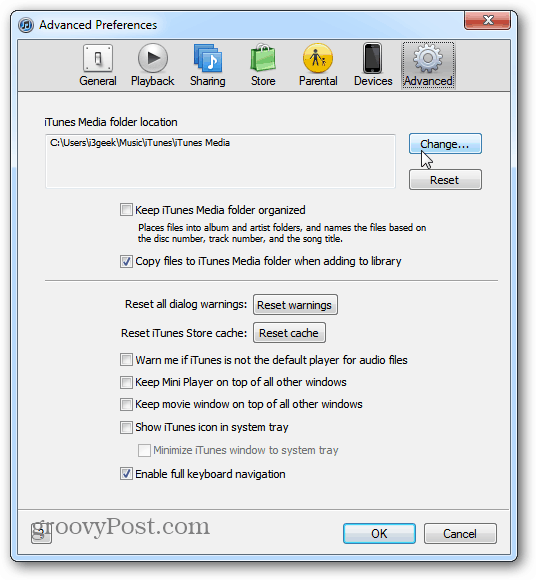 It therefore makes sense to learn how to copy iTunes from a Mac to a PC to allow for greater portability for either system or either system’s music and entertainment files.Part 1: Simplest Way to Transfer iTunes Library from Mac to PCWhen it comes to how to move iTunes libary from Mac to PC, here we highly recommend from Aimersoft to you. It is a All-in-one-music management tool to tranfer, backup, restore your iTunes library Music from Mac to PC. If, however, a family member with a PC is heading off on a holiday and wants to bring their tunes or entertainment selection with them, it may be difficult to simply leave the copy of iTunes on one machine.
This is the SDL wiki; SDL's main website is https://libsdl.org/.
This wiki is your portal to documentation and other resources for SDL 2.0.
Using the SDL documentation Wiki
Use the links under the Navigation Links heading in the left-hand menu to access:
Introduction
An introduction to the features in SDL 2.0.
Includes a Migration Guide from 1.2 to 2.0!
Source Code
- How to download the source code to SDL.
Installation
- How to install SDL on your platform of choice and link your program against it.
API reference by Name or by Category
- The official documentation for the API. Look here to find detailed information about the functions, structures, and enumerations.
Tutorials
Open mac library. Hello Arthur,Welcome to Microsoft Community forum.If you are facing issue to open iPhoto library on Windows 8 then you may try the steps mentioned in the following threads on Apple forum.If issue still persists you may refer to the steps provided by Vinod N replied on 08 January, 2012in the following thread.Note: The steps are for Windows 7 but holds good for Windows 8 too.Hope this information is helpful. If the issue still persists, please post back for further assistance, we'll be glad to assist you.Thank You. Ramesh Kumar.
- Want to learn about a feature in SDL you haven't used before? Here's a great place to get started!
Articles
- A sampling of the articles that have been written about SDL.
Books
- Looking for more information than you can get online? Check out the books listed here.
FAQs
- A few of the most commonly asked questions about using SDL are answered here.
Forums
- A great place to keep up with the latest news, help other users out, and ask questions.
Contributing
- Users wishing to contribute content to the wiki should follow the guidelines provided in this guide.
We hope you find everything you are looking for and enjoy using SDL. If anything is not addressed somewhere here feel free to take advantage of the Feedback form in the upper right or send an email to <ANTI SPAM wiki AT libsdl DOT org>.
Enjoy!
Contents
- FAQ: Mac OS X
What is supported?
SDL 2.0.0 supports Mac OS X 10.5 and newer, using either Xcode or the classic Unix-style build system. Currently only Xcode can be used to build the SDL Framework. The Unix-style build system creates classic shared and static versions of the SDL library.
For the latest information see the page about Installation.
What is the difference between the Xcode and the Unix-style build system?
The SDL-devel package contains the SDL libraries in the form of a Framework. That is perfectly fine as long as you want to develop using Xcode. However, applications which use a configure script almost always require SDL to be installed Unix-style.
Sdl
When installed as a Framework, all SDL files (the library and the header files) are aggregated into a .framework bundle, and installed together into /Library/Frameworks/ or ~/Library/Frameworks/. There, Xcode can find it. But packages which want to use SDL but employ a Unix-style build system are usually not able to find SDL there (there are a few exceptions where people hand modified their configure scripts to allow using Frameworks on OS X, but those are rare).
When installing Unix-style, SDL gets installed into /usr/local/bin, /usr/local/include and /usr/local/lib (the exact path can vary, for example the Fink SDL package will use /sw instead of /usr/local by default). This way, build system tuned to support generic Unix systems are able to find them.
How do I install SDL Unix-style?
Either you can compile and install it from source (via the usual ./configure && make && make install procedure). Or install it via some kind of packaging system which ships premade packages for SDL. For example, both Fink and MacPorts include packages which are suitable. You can learn more about them on their respective sites.
Note that as long as you static link the release builds of your application, it doesn't really matter which way you installed SDL -- for example, even if you installed it via Fink, if you static link SDL, your users do not have to install Fink.
How do I build an OpenGL application?
Sdl Library Mac
On Mac OS X, you access the OpenGL headers like so:
The header file 'SDL_opengl.h' includes these headers on all supported SDL systems.
If you are using Xcode, add OpenGL.framework to your project. On the command line, add:
-framework OpenGL
to the GCC or LD arguments in your Makefile
How do I include the SDL framework in my application?
One good strategy can be found here: Properly bundling .frameworks in your application package