Mac Shared Library
- Mac Shared Library Files
- Mac Os Shared Library Path
- Mac Clang Shared Library
- Mac Shared Library Windows 7
- Show User Library Mac
- Mac Shared Library Password
How to merge photo libraries on mac 2020. Learn how to access the hidden Library folder in your Home folder on your Mac so you can tweak app settings and access app files.
Allowing two accounts to access the same library could cause issues as changes are made. I don’t do this myself, but if I were to try it, without iCloud in the mix, I would simply save the Photos library to an external drive or to the Shared folder on the Mac. Then have the second account open that very same library. Sep 11, 2006 There is indeed, a Library for the whole volume. However, since one of the advantages of Unix based OS X is that you can have several completely separate and self-contained user accounts on a single volume, and each user account has its own set up, permissions and preferences, having a Library in each Home Folder facilitates this ability. Jan 09, 2020 In addition to sharing music and video libraries, macOS also includes basic file sharing, printer sharing, internet connection sharing, and a handy screen sharing feature for getting tech support. All of these sharing features are now accessible from the Sharing panel within System Preferences.
Jan 12, 2020 You can access the hidden Library folder without using Terminal, which has the side effect of revealing every hidden file on your Mac. This method will only make the Library folder visible, and only for as long as you keep the Finder window for the Library folder open.
Inside the home folder on your Mac is a Library folder that stores app-specific files and settings, personal settings, and some data. The files and settings in the Library folder should be left alone for the most part. But, you may want to tweak the settings for an app, which may require accessing the Library folder. Or, maybe an app backs up data to the Library folder and you want to copy that to an external drive.
- Aug 15, 2008 Dynamic Libraries, RPATH, and Mac OS. On the Mac a dynamic library (dylib) has an 'install name'. The install name is a path baked into the dynamic library that says where to find the library at runtime. When you link against the dylib this path is saved in your binary so that your binary can find the dylib at runtime.
- Shared Library in OneDrive - Can't Get it on Sidebar of Mac Finder Window I want to be able to quickly save files directly to our shared library in OneDrive like I do with Dropbox. Right now, I save it to my Dropbox and then have to bring files over to Sharepoint for our team to see as well.
As of Mac OS X Lion (10.7), the Library folder in your home folder is hidden by default. That doesn’t mean you can’t get to it. It’s hidden so you don’t accidentally delete settings and data, damaging apps in the process. So, if you decide you want to access the Library folder, be very careful.
How to see cache in library mac. Yes, it is safe. That said, don't just delete all the contents of your cache folder without reason. It can be beneficial to clear out those taking up the significant space in your /Library/Caches/ if you need to free some up, but you really shouldn't clear any contents of your /System/Caches unless there is a problem. As would be expected, you will find that the programs you access most often. Access Library Folder On Mac. The Library Folder on your Mac contains Preference Files, Caches, and Application Support Data. While regular Mac users may not find the need to access the Hidden Library Folder, advanced Mac users will at times come across the need to access files inside the Library Folder for troubleshooting and other purposes. May 30, 2019 Despite the fact that Apple keeps the Mac Library folder hidden from users, it’s good to learn how to show the Library folder on Mac. You may need to access the Library folder when you need to clear cache, remove the app’s leftovers, edit preference files manually, etc. Jan 12, 2020 You can access the hidden Library folder without using Terminal, which has the side effect of revealing every hidden file on your Mac. This method will only make the Library folder visible, and only for as long as you keep the Finder window for the Library folder open. Sep 27, 2016 A lot of Mac tutorials mention the Library folder, which is where your macOS applications store things like settings and caches. Some settings can only be changed by editing files in the Library. But the Library is hidden by default.
Today we’re going to cover different ways of accessing the hidden Library folder in your home folder and how to make it permanently available in Finder.
What is the Path to the Library Folder?
The Library in your home folder is written as ~/Library. The tilde (~) character is a shortcut for your home directory. For example, on my Mac, that would expand to /Users/lorikaufman/Library.
Access the Library Folder Using the Go to Folder Option
If you want to access the Library folder only occasionally, you can use the Go to Folder option in Finder.
Open Finder or just click on the desktop. Head to Go > Go to Folder, or hit Cmd + Shift + G.
Type:~/Library in the Go to the folder box on the dialog box and click Go or press Enter.
If you have one or more Finder windows open, the Library folder opens in the currently active window. If no Finder windows are open, a new one opens to the Library folder.
Access the Library Folder Using the Terminal
If you prefer using the command line, you can access the Library folder using the Terminal.
Go to Utilities > Terminal in the Applications folder. To access the Library folder directly in the Terminal, type:cd ~/Library at the prompt to switch to the Library folder.
You can type:ls at the prompt to get a detailed folder listing. You can work with the files in the Library folder directly on the command line. Just be careful.
You can also use the Terminal to open the Library folder in a Finder window. Type:open ~/Library at the prompt and hit Enter.
Access the Hidden Library Menu Option in Finder
The Library folder is available on the Go menu in Finder, but it doesn’t show on the menu by default.
To temporarily show the Library option on the Go menu, open the menu and press the Option key. The Library folder shows up between Home and Computer on the Go menu. Keep the Option key pressed while you move your mouse down the menu and select Library.
If you’re using a Windows keyboard with your Mac, press the Alt key.
Show the Library Folder Permanently in Finder
If you access the Library folder often, you can permanently show the Library option on the Go menu and the Library folder in your Home folder.
Open Finder and head to your Home folder using the left pane or by pressing Cmd + Shift + H. Then, go to View > Show View Options, or hit Cmd + J.
A dialog box displays with options you can set for your Home folder. Check the Show Library Folder box at the bottom of the dialog box. The Library folder now shows up in your Home folder in Finder windows and the Library option becomes permanently available on the Go menu.
When you permanently show the Library folder in Finder, you can hit Cmd + Shift + L to open it in a Finder window, in addition to selecting the Library option on the Go menu.
Happy Tweaking, But Be Careful
The Library folder is hidden by default for a good reason. So, before tweaking settings and changing files in the Library folder, make sure you know what you’re doing.
By William Gallagher
Tuesday, October 08, 2019, 06:44 am PT (09:44 am ET)
Set up Home Sharing once and you'll be able to watch films and TV, or listen to music and podcasts, from your Mac
Say this for the old iTunes app, it did a lot. One of its less high-profile features was the deeply useful ability to share your music, films and TV to your other devices around the home, like your Apple TV, without having to use AirPlay. This Home Sharing meant you could watch your film library on your Apple TV, for instance, and more importantly, select what you wanted to watch from the Apple TV instead of pushing it to the set top with another device.
Even though iTunes is now gone, its features have been dispersed around macOS Catalina. When you know where to look, you can get back Home Sharing particularly easily.
First you need to enable Home Sharing in Settings, then you have to find it in the new Music and TV apps.
Turn it on
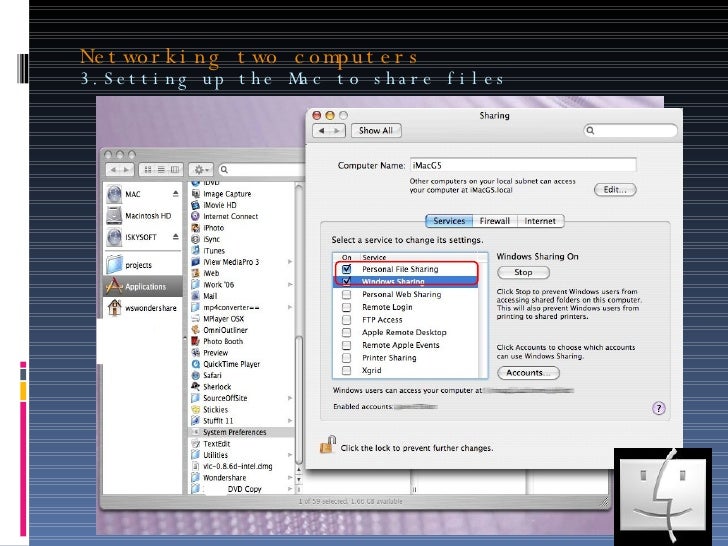
On your Mac, enable home sharing by going to System Preferences.
- Click on Sharing
- Tick Media Sharing
Once you do this, you see a whole section of settings to do with home sharing.
Setting up Home Sharing is now a quick job in System Preferences
You can give your media library a name that will be easy to identify from other devices later. By default, it will already be called by your Mac's name.
Next, specify what you want to share.
Mac Shared Library Files
- Tick Home Sharing
- Authenticate with your Apple ID account and password
- Optionally, turn on Share media with guests
Under Home Sharing, you get some overall controls. You can tick to have your play counts updated when you watch on another device. So, if you have smart playlists that, for instance, include only music that you've played more than some particular number of times, this will keep that count accurate.
Next to Share media with guests, you get an Share media with guests button.
The most important option is Require password. It's up to you, and it's definitely more inconvenient for your guests if they have to use a password. However, if you're not keen on a neighbour working through your entire 'Harry Potter' movie collection, set a password.
You can limit who gets to stream what
You can then choose between sharing everything, or just specific playlists.
Listening and watching
Whether you want to watch or listen to your media on a Mac or an iOS device, the next part of the job is the same. You have to sign in to Home Sharing on that device —and using the same Apple ID that you did on your Mac.
On another Mac, anywhere on your network, open the new Music app. On the left, you'll see a column containing Apple Music sections, and then Library.
Mac Os Shared Library Path
If your Macs are logged in to the same Apple ID, then when Home Sharing is running on one, its library will appear on the other.Notice both the Library drop down and how that has two shared libraries in it
Mac Clang Shared Library
This isn't a case of your main Mac acting as a single, central library, either. In this example, the Master iTunes Library is the name we gave a Mac mini that has our music on.
This Library section will show you as many Home Shared devices as you have.
On iPhone and iPad
On an iOS device, go to Settings
Mac Shared Library Windows 7
, and tap Music. Oddly, you have to go to Music even what you want is to share TV or podcasts.In the Music section, scroll to the bottom and Home Sharing. Tap to log in with your Apple ID —and if that ID is the same as the one on your phone, it will even suggest that plus its password.
Once you've done this, then in the Music, TV or Podcasts apps, tap on Library.
In each of these apps, you'll see the name of your Catalina Mac's library listed and can just tap through to watch or listen to what you want.
Showing that the iTunes past isn't that far behind us, to see your home shared TV or podcasts library, you still have to set it up in Settings, Music
Where it goes wrong
Apple's built-in Home Sharing isn't gigantically customizable and it doesn't offer a lot of options to choose from, but using it and setting it up is straightforward. Where you may find a problem is when you come to turn on Home Sharing on your Catalina Mac. It's possible that you'll find you can't tick the Media Sharing box.
Oddly, even when that is unavailable, you can still go into the sharing section and turn on Home Sharing. You can turn it on, you'll be prompted to authenticate with your password, and you can then choose the options about sharing with guests, but it doesn't matter.
If you can't first tick that Media Sharing button, your Mac ignores everything you do in the section.
Show User Library Mac
The issue is likely to be related to authorizations on your Mac. Even if you believe your Mac was authorized to play your iTunes media, the move to Catalina appears to sometimes undo that.
To fix it, authorize your macOS Catalina Mac in Music and TV. In our testing, we've found that rarely you may have to deauthorize all of your Macs first and then re-authorize them in Music and TV —and then Home Sharing will work.