Mac Os X Gcc Link Static Library
When you need to use a dynamic library in your product, you have to install the library in your computer. You may use dynamic libraries as dependent libraries (by specifying them in your product’s link line) or as runtime loaded libraries (by loading them when they are needed, using dlopen(3) OS X Developer Tools Manual Page).
- Mac Os X Gcc Link Static Library In San Antonio
- Gcc Static Libgcc
- Mac Os X Gcc Link Static Library In Windows 7
- Mac Os X Gcc Link Static Library C
This article describes the process of installing and using dynamic libraries. It’s based on the Ratings dynamic library and the StarMeals, StarMeals2, and Grades programs, which are included in this document’s companion-file package. This article also shows how to use dynamic libraries as dependent libraries or as runtime-loaded libraries. Finally, this article demonstrates how to interpose the functions exported by a dynamic library.
Icloud photo library download. Select 'Preferences' option. Click 'iCloud' tab. Tap 'Photos' from menu bar.
On: Linux with Eclipse,; Mac OS X and Xcode, and; Windows with Visual Studio or Cygwin. Sample code: the sample Makefile and source code build a simple line drawing application and runs on Linux, Mac OS X, and Windows platforms. You can also try out some examples with buffer objects and shaders. If you're interested in using GLFW instead of GLUT, please refer to the course note Building. How to link OpenSSL library in macOS using gcc? Ask Question. The openssl libraries installed with your os, rather than the homebrew libraries. To link against. 2012-7-23 Overview of Dynamic Libraries. Two important factors that determine the performance of apps are their launch times and their memory footprints. Reducing the size of an app’s executable file and minimizing its use of memory once it’s launched make the app launch faster and use less memory once it’s. 2020-4-6 That said, you can choose to statically link C and C programs on Linux, only when you know what you are doing and why.And you have ways to avoid some problems like setting GCONVPATH, enabling -enable-static-nss for glibc, using other DNS libraries rather than NSS and never use dlopen.You can even use other libc implementation like uClibc or musl libc which are more friendly for static. 2020-2-7 How to link OpenSSL library in macOS using gcc? Ask Question Asked 2 years, 11 months ago. It looks like you are trying to link against the openssl libraries installed with your os, rather than the homebrew libraries. Try to link against this library rather than the ones in /usr/lib. The /usr/lib libraries are old and not compatible. 這裡介紹如何使用 gcc 編譯器自己製作 C/C 靜態、共享與動態載入函式庫,讓程式碼可以更方便的重複使用。 在開發不同的程式時,如果有一些程式碼是重複會用到的話,就可以將其製作成獨立的函式庫,不僅維護上更方便,也可以方便其他專案或是開發者使用,以下介紹以 gcc 還有 ar 等工具製作.
Installing Dependent Libraries
Before you can use a dynamic library as a dependent library, the library and its header files must be installed on your computer. The standard locations for header files are ~/include, /usr/local/include and /usr/include. The standard locations for dynamic libraries are ~/lib, /usr/local/lib, and /usr/lib.
You may also place the .dylib file at a nonstandard location in your file system, but you must add that location to one of these environment variables:
LD_LIBRARY_PATHDYLD_LIBRARY_PATHDYLD_FALLBACK_LIBRARY_PATH
For details on how to add paths to these environment variables, see Opening Dynamic Libraries. To learn about installing dependent libraries in a relocatable directory, see Run-Path Dependent Libraries.
If you don’t want to change the environment variables and you want to place the dynamic library in a nonstandard location, you must specify where in your file system you placed the library when you link your image. See the description of the compiler -dylib_file option in http://gcc.gnu.org/onlinedocs/gcc/Darwin-Options.html#Darwin-Options for details.
For example, in OS X the executable code of apps can be packaged together with frameworks containing libraries created specifically for a particular app. These frameworks are known as private embedded frameworks. Applications that use private embedded frameworks, as well as the frameworks themselves, must be specially built. See “Creating a Framework” in Framework Programming Guide and “Loading Code at Runtime” in Mach-O Programming Topics for details.
Using Dependent Libraries requires that the Averages 1.1 and Ratings 1.1 dynamic libraries be installed on your computer. To install these libraries:
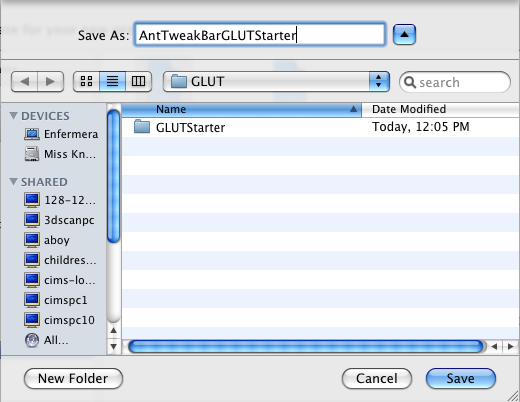
Open this document’s companion-file package.
In Terminal, execute these commands:
Note: To uninstall the libraries, execute these commands:
Using Dependent Libraries
Using dynamic libraries as dependent libraries by linking your image with them provides several benefits, including producing smaller executable files and not having to get the address of the libraries’ exported symbols before using them in your code. However, you still have to make sure a weakly imported symbol exists before using it.
All you need to do to use a dynamic library as a dependent library is include the library’s headers in your source code and link the library with your program or library. The library’s headers describe the symbols you can use. You should not use any other symbols to access the library’s functionality. Otherwise, you may get unexpected results, or your image may stop working for its users when they update the dependent library in their computers.
Listing 1 shows the source code of a small program that uses Ratings 1.1, developed in Creating Dynamic Libraries.
Mac Os X Gcc Link Static Library In San Antonio
Listing 1 Using Ratings 1.1 as a dependent library
This list describes the highlighted lines:
Line 1: The
meanRatingfunction is guaranteed to exist in all versions oflibRating.A.dylib. Therefore, no existence test is required.Lines 2 and 3: The functions
medianRatingandfrequentRatingare available in Ratings 1.1 but not Ratings 1.0. Since StarMeals is to be backwards compatible with Ratings 1.0, it has to check for the existence of these functions before using them. Otherwise, StarMeals may crash.
To compile the StarMeals.c file, use the command shown in Listing 2.
Listing 2 Compiling and linking StarMeals
Gcc Static Libgcc
Notice that the exact location of the library StarMeals directly depends on (libRatings.dylib) is provided at the link line. The pathname <user_home>/lib/libRatings.dylib is actually a symbolic link to <user_home>/lib/libRatings.A.dylib. At link time, the static linker resolves the link and stores the library’s actual filename in the image it generates. With this approach, the dynamic linker always uses the library’s complete name when it looks for an image’s dependent libraries.
Listing 3 shows the output StarMeals produces when run in test mode:
Listing 3 Test output of the StarMeals program
Mac Os X Gcc Link Static Library In Windows 7
Using Runtime-Loaded Libraries
An image that uses dynamic libraries as runtime-loaded libraries is smaller and loads faster than the image using the same libraries as dependent libraries. The static linker doesn’t add information about the runtime-loaded libraries to the image. And the dynamic loader doesn’t have to load the library’s dependent libraries when the image is loaded. However, this flexibility comes at a price. Before an image can use a dynamic library that is not one of its dependent libraries, it must load the library with dlopen(3) OS X Developer Tools Manual Page and get the address of each symbol it needs with dlsym(3) OS X Developer Tools Manual Page. The image must also call dlclose(3) OS X Developer Tools Manual Page when it’s done using the library.
The StarMeals2 program provides the same functionality that StarMeals provides. But StarMeals2 uses the Ratings 1.1 dynamic library as a runtime loaded library. Listing 4 shows the program’s source code.
Listing 4 Using Ratings 1.1 as a runtime-loaded library
Listing 5 shows to compile the StarMeals2 program.
Listing 5 Compiling and linking StarMeals2
Mac Os X Gcc Link Static Library C
The static linker doesn’t complain about the unresolved external references in libRatings.A.dylib because it’s not included at the link line. The dynamic linker resolves these references when StarMeals2 uses dlopen(3) OS X Developer Tools Manual Page to load libRatings.A.dylib.
Interposing Functions in Dependent Libraries
Sometimes you need to perform operations before or after a function is called to gather statistical data or to modify its inputs our outputs. For example, you may want to find out how many times a program calls a specific function to determine whether an algorithm should be optimized. However, you may not always have access to the function’s source code to make the modifications. Interposition is a mechanism through which you can define your own version of a function that’s defined in an image’s dependent libraries. In your version, you may or may not call the original function.
Note: In OS X you can interpose only dependent libraries. Symbols in runtime loaded libraries cannot be interposed.
To call an interposed function from a custom definition, you use the dlsym(RTLD_NEXT, '<function_name>') call to get the address of the “real” function. For example, Listing 6 shows how you may write a custom version of a function defined in a dynamic library.
Listing 6 Interposing a function
You may use interposition to adapt an existing dynamic library to your particular needs without changing its API. For example, this document’s companion package includes the implementations of two dynamic libraries called Ratings and RatingsAsGrades. The Ratings library implements a star-based rating system (it can be used to tally restaurant and hotel ratings; for example, *** and *****). The RatingsAsGrades library implements a letter-based grading system, which can be used to tally student grades; for example A and C. Instead of writing a new algorithm to manage letter grades, the RatingsAsGrades library leverages the functionality of the Ratings library. Listing 7 shows the interface and implementation of the RatingsAsGrades library.
Yajl library mac. //// GHNSBundle+Utils.h// GHKit//// Created by Gabriel Handford on 4/27/09.// Copyright 2009. All rights reserved.//@interface NSBundle ( YAJLGHUtils )/.!Load data from resource.@param resource Name of resource@result NSData./- ( NSData. ) yajlghloadDataFromResource:( NSString.
Listing 7 RatingsAsGrades Interposing Ratings
Notice how the addRating, medianRating, and frequentRating functions, modify the input and output of the definitions they shadow.
The companion-files package includes the source code of the Grades program. This program uses the RatingsAsGrades library to tally the grades of students.
Follow these instructions to build and run the Grades program:
Open this document’s companion-files package.
In Terminal, perform these commands:
Listing 8 shows the output of the Grades program when ran in test mode.
Listing 8 Test output of the Grades program
Copyright © 2012 Apple Inc. All Rights Reserved. Terms of Use Privacy Policy Updated: 2012-07-23