Access Library Folder Mac El Capitan
- Access Library Folder Mac El Capitan Free
- Access Library Folder Mac El Capitan Download
- Access Library Folder Mac El Capitan Mac
Learn how to access the hidden Library folder in your Home folder on your Mac so you can tweak app settings and access app files.
Photos (OS X Yosemite / El Capitan) – show original in Finder? Ask Question. EDIT: I know I can just 'Show Package Contents' or use the terminal to access /Pictures/Photos Library and hunt through the folder structure manually. As a lover of the Mac terminal (i.e. Bash) I don't have a problem with this sort of constraint because I can. Jul 18, 2015 Changing any single part of this folder without deep knowledge about Mac Operating System obviously causes unexpected troubles. The 2 ways to access and open Library folder in OS X – El Capitan, Yosemite or any other OS X versions? Look at 2 quick ways below: 1. The Library appears under Go once you hold the Option key. From Finder hold. Mar 05, 2015 Multiple ways of accessing your user library folder in OS X. Do you need to access your “user library” folder? If you come across instructions that direct you to do so, or if you otherwise develop the need to modify items within your library folder, then unless you are familiar with OS X’s library structures, you might end up being either.
Feb 21, 2020 El Capitan Desktop Support El Capitan Desktop Guides Yosemite Desktop Support. Mac Hardware iMac Mac Pro Mac mini MacBook Pro MacBook Air Mac OS X Support. How do we manually install kexts in Catalina if we are not allowed access to the main Library folder? Click to expand. Keep your kexts in clover with Catalina. Dec 30, 2016 While many Mac users may never need to access their User Library folder while running macOS Sierra — some advanced users, may need to get in there and access support data and such when troubleshooting. The folder is hidden by default in macOS Sierra, but it only take a few moments to access it, or make it so that the folder is always visible. Oct 03, 2018 Learn how to access the hidden Library folder in your Home folder on your Mac so you can tweak app settings and access app files. Inside the home folder on your Mac is a Library folder that.
Inside the home folder on your Mac is a Library folder that stores app-specific files and settings, personal settings, and some data. The files and settings in the Library folder should be left alone for the most part. But, you may want to tweak the settings for an app, which may require accessing the Library folder. Or, maybe an app backs up data to the Library folder and you want to copy that to an external drive.
As of Mac OS X Lion (10.7), the Library folder in your home folder is hidden by default. That doesn’t mean you can’t get to it. It’s hidden so you don’t accidentally delete settings and data, damaging apps in the process. So, if you decide you want to access the Library folder, be very careful.
Today we’re going to cover different ways of accessing the hidden Library folder in your home folder and how to make it permanently available in Finder.
What is the Path to the Library Folder?
The Library in your home folder is written as ~/Library. The tilde (~) character is a shortcut for your home directory. For example, on my Mac, that would expand to /Users/lorikaufman/Library.
Access the Library Folder Using the Go to Folder Option
If you want to access the Library folder only occasionally, you can use the Go to Folder option in Finder.
Open Finder or just click on the desktop. Head to Go > Go to Folder, or hit Cmd + Shift + G.
Type:~/Library in the Go to the folder box on the dialog box and click Go or press Enter.
If you have one or more Finder windows open, the Library folder opens in the currently active window. If no Finder windows are open, a new one opens to the Library folder.
Access the Library Folder Using the Terminal
Access Library Folder Mac El Capitan Free
If you prefer using the command line, you can access the Library folder using the Terminal.
Go to Utilities > Terminal in the Applications folder. To access the Library folder directly in the Terminal, type:cd ~/Library at the prompt to switch to the Library folder.
You can type:ls at the prompt to get a detailed folder listing. You can work with the files in the Library folder directly on the command line. Just be careful.
You can also use the Terminal to open the Library folder in a Finder window. Type:open ~/Library at the prompt and hit Enter.
Access the Hidden Library Menu Option in Finder
The Library folder is available on the Go menu in Finder, but it doesn’t show on the menu by default.
To temporarily show the Library option on the Go menu, open the menu and press the Option key. The Library folder shows up between Home and Computer on the Go menu. Keep the Option key pressed while you move your mouse down the menu and select Library.
If you’re using a Windows keyboard with your Mac, press the Alt key.
Show the Library Folder Permanently in Finder
If you access the Library folder often, you can permanently show the Library option on the Go menu and the Library folder in your Home folder.
Access Library Folder Mac El Capitan Download
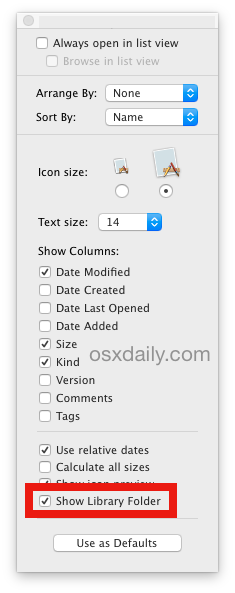
Open Finder and head to your Home folder using the left pane or by pressing Cmd + Shift + H. Then, go to View > Show View Options, or hit Cmd + J.
A dialog box displays with options you can set for your Home folder. Check the Show Library Folder box at the bottom of the dialog box. The Library folder now shows up in your Home folder in Finder windows and the Library option becomes permanently available on the Go menu.
When you permanently show the Library folder in Finder, you can hit Cmd + Shift + L to open it in a Finder window, in addition to selecting the Library option on the Go menu.
Access Library Folder Mac El Capitan Mac
Happy Tweaking, But Be Careful
The Library folder is hidden by default for a good reason. So, before tweaking settings and changing files in the Library folder, make sure you know what you’re doing.
Do you need to access your “user library” folder? If you come across instructions that direct you to do so, or if you otherwise develop the need to modify items within your library folder, then unless you are familiar with OS X’s library structures, you might end up being either being unable to locate your library, or using the wrong one.
In brief, OS X contains the following three library folders: The System Library (Macintosh HD > System > Library) is only for OS X system software and core services, and it is highly unlikely that you will need to access or modify any files in this folder. The Global Library (Macintosh HD > Library) is a central location for system-wide resources, including collections like Fonts and Sounds, and settings for services that affect all users like the firewall. You can make changes to this folder, but you might be required to authenticate as administrator, and any changes you make will affect all users. For instance, adding a new font here will give all users access to this font.
The User Library is located at the root of your user account (Macintosh HD > Users > username > Library), and will contain practically all of the settings, resources, and customizations that you have made for programs and many system preference settings. In the latest versions of OS X, this folder is hidden, and since it shares the same name and properties as the other Library folders, you might instead find yourself making modifications to the Global Library.In best practice, however, you should keep modifications limited to your user library as much as possible, especially if there are multiple users on your system. Since Apple has added a layer of difficulty for accessing the library, one of the following approaches can be used to reveal or access it:
- In the Finder, click the Go menu and then hold the Option key to reveal the Library option
- In the Finder, press Shift-Command-G and then enter “~/Library” in the field
- In the Terminal, run the following command:
- Open Spotlight, and specify the library by path (i.e., “~/Library”)
With your home library shown, you can drag it to the Dock, or to your Finder sidebar, to have it be more readily available. If you regularly tweak your system, this can be a big convenience.
How to delete photos from icloud photos on mac. On your Mac, go to System Preferences iCloud Options next to Photos. If this is an option for you then I recommend doing the backup before you make any changes.
While these will give you access to your Library, an easier option is to simply have it available to directly open, especially if you are regularly organizing or editing files in it manually. To do this, go to your Home folder in the Finder, press Command-j, and you will see a setting in the View Options panel for revealing your library. With this checked, you can now use any of the following standard folder-management approaches for your Library:
- Drag the Library to your Finder sidebar
- Drag the Library folder to your Dock
- Make an alias (select it and press Command-L and then place the alias where you want, such as your Desktop)